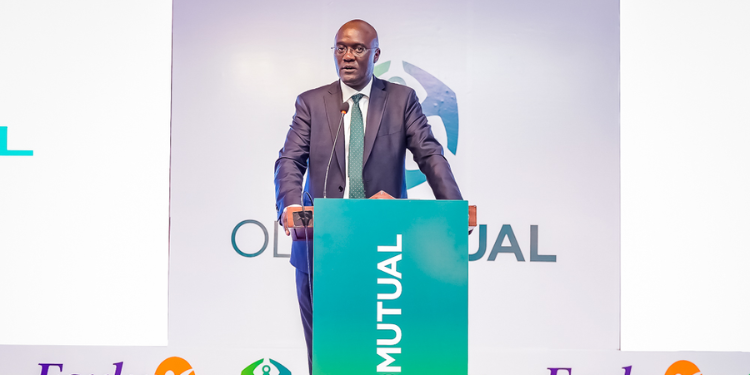
A new Old Mutual Financial Wellness Monitor reveals that 30% of working Kenyans are earning more than a year ago, with 7 in 10 expecting their financial situation to improve over the next six months, highlighting a growing sense of resilience and optimism among the workforce.
The survey, conducted in October 2025, found that financial satisfaction among employed Kenyans rose from 5.2 out of 10 in 2024 to 5.9 in 2025, driven by improved macroeconomic conditions.
“Kenyans are not waiting for the economy to improve. In the face of economic pressure, they are actively engineering their own recovery, adapting, innovating, and finding new ways to improve their financial position,” said Arthur Oginga, Old Mutual Group Chief Executive Officer.
Despite this optimism, challenges persist. The study revealed that 43% of respondents remain considerably financially stressed, with rising living costs, mounting debt, and expanding financial responsibilities weighing heavily on households.
Forty percent of Kenyans have borrowed to meet everyday expenses, 54% carry the same or higher debt than last year, and 46% regularly overspend their budgets.
“The 2025 report paints a picture of a nation in transition. Kenyans are resilient and entrepreneurial. But without stronger support in financial literacy, savings discipline, retirement planning, and protection, this progress risks remaining short-term,” said Vuyokazi Mabude, Head of Knowledge & Insights at Old Mutual.
The monitor also highlights changing financial behaviors. A notable 91% of Kenyans now report having a savings goal, while 26% are juggling multiple jobs or side hustles, an increase from 20% in 2024.
Among these “poly-jobbers,” 25% say that income from side jobs exceeds earnings from their main employment. Additionally, 46% of working Kenyans belong to the sandwich generation, supporting both children and adult dependents, which has increased by four percentage points in 2025.
“The shift from passive financial behavior to active financial intent is clear. Kenyans are working harder and setting goals, but they need the right tools, advice, and protection to translate this resilience into long-term financial security,” said Dr. Tabitha Njuguna of Strathmore University Business School.
The study underscores ongoing financial pressures, with 40% of Kenyans relying on loans for daily expenses and four in ten lacking sufficient savings to cover three months of living costs.
The study also shows that while 53% of respondents have savings that can last at least three months, nearly four in ten remain financially vulnerable, with insufficient buffers to withstand income shocks.
“As a financial sector, we must shift from simply responding to loss to actively protecting progress, while making financial education and advisory services more accessible to every Kenyan,” said Japheth Ogalloh, Managing Director of Old Mutual General Insurance Kenya.
The annual survey focused on employed Kenyans aged 20 to 59 earning at least Sh12,000 per month. Data was collected through both online and face-to-face interviews and weighted to reflect Kenya’s workforce, with a 70:30 informal-to-formal sector ratio.